You’ve picked your color. You’ve bought the paint. You’re ready to get started.
But here’s the thing: the color you picked and the paint you bought aren’t what determine how good your finished project looks or how long it lasts. That’s almost entirely determined by what happens before a single brush hits the wall.
Prep work is the unglamorous part of painting. It doesn’t make for a satisfying before-and-after photo. But skip it, and you’ll end up with a paint job that peels, bubbles, or looks uneven in a matter of months. Do it right, and your paint will look great for years.
Here’s what good prep involves and why it matters.
Cleaning the Surface Is Non-Negotiable
Paint needs a clean surface to adhere to. Dirt, dust, grease, and mildew all interfere with that bond, and in Florida, mildew is everywhere. On interior walls, that might mean wiping down the surface with a mild cleaner before you start. On exteriors, it usually means power washing first.
This is one of the most commonly skipped steps in a DIY paint job, and it’s one of the most damaging. Even paint that looks fine at first will start failing much sooner on a dirty surface. The paint isn’t bonding to the wall; it’s bonding to whatever’s sitting on top of it.
Cracks, Holes, and Damage Need to Be Fixed First
New paint doesn’t fix damage; it just covers it. And usually, not for long. Small cracks and nail holes can show right through paint if they’re not properly filled and sanded first. Larger damage—like drywall cracks or wood rot around windows and trim—will only get worse if you paint over it without addressing it.
Before any paint goes on, the surface needs to be smooth and structurally sound. That means filling imperfections, sanding them flush, and making sure any wood that’s started to go soft is repaired or replaced. It takes time, but it’s the difference between a paint job that lasts two years and one that lasts ten.
Sanding Creates the Adhesion You Need
Even on surfaces that look smooth, a light sanding pass makes a real difference. Sanding creates a slightly rough texture called a “tooth” that gives paint something to grip. On previously painted surfaces, it also smooths out any rough edges, drips, or uneven areas left by the last coat.
This step is especially important when painting over glossy paint or trim. High-gloss finishes are designed to be durable, which means they’re also harder for new paint to stick to. Skipping the sanding here is a common reason painted trim starts peeling.
Primer Isn’t Always Optional
A lot of homeowners skip primer to save time or money, but primer does a specific job that paint can’t do on its own. It seals porous surfaces so paint applies evenly, it helps paint adhere to difficult materials like bare wood or fresh drywall, and it blocks stains from bleeding through.
When you’re making a dramatic color change—going from a dark color to a lighter one, for example—primer is especially important. Without it, you’ll be applying coat after coat of paint trying to get even coverage, and you might not fully get there.
Taping and Protection Keep the Job Clean
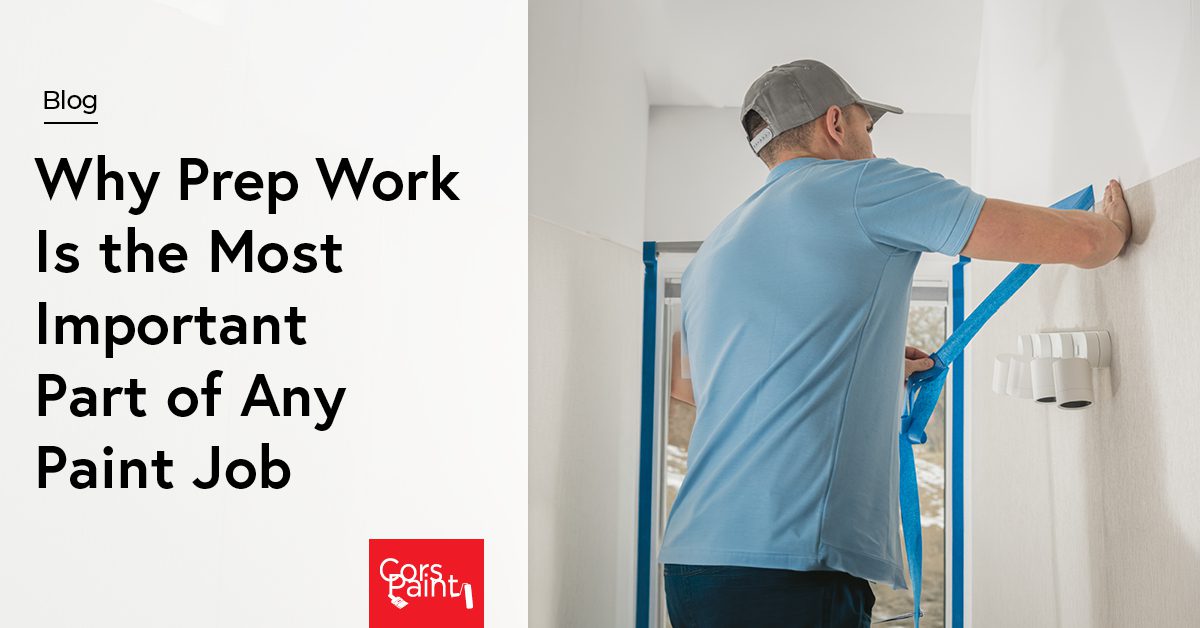
Good prep isn’t just about the surface you’re painting; it’s also about protecting the surfaces you’re not. Taping off trim, covering floors with drop cloths, removing outlet covers and hardware: these aren’t optional finishing touches. They’re what separates a clean, professional-looking result from one that looks like it was done in a hurry.
Taking an extra hour at the start to tape and cover properly saves a lot of cleanup time at the end and prevents you from damaging surfaces that were never meant to be painted in the first place.
The Honest Truth About Prep Work
Prep work is time-consuming, detail-oriented, and easy to rush. Most homeowners who DIY a paint job spend the majority of their time on the actual painting and rush through prep, when professionals will tell you it should be the other way around.
That’s not a knock on DIYers. It’s just the reality of how most people approach painting compared to how professionals do. At CorsPaint, prep is built into every job from the start. We don’t pick up a brush until the surface is clean, repaired, sanded, and ready because that’s what produces a paint job that holds up.
If you’re thinking about a painting project and want to make sure it’s done right the first time, give us a call. We’ll walk through the job with you and give you a free estimate.
Read More: “5 Common DIY Painting Mistakes”
Frequently Asked Questions About Painting Prep
Prep work is what determines how long a paint job lasts and how good it looks. Paint applied to a dirty, damaged, or improperly primed surface will peel, bubble, or look uneven much sooner than paint applied to a properly prepared one. The quality of the paint matters, but the quality of the prep matters more.
A thorough prep process includes cleaning the surface (power washing for exteriors, wiping down for interiors), repairing any cracks, holes, or damaged wood, sanding to create proper adhesion, applying primer where needed, and taping off trim and protecting floors and fixtures before painting begins.
Not always, but in many cases, yes. Primer is essential when painting over bare wood or fresh drywall, making a significant color change, or covering stains. Skipping the primer in these situations typically results in uneven coverage and paint that doesn’t hold as well over time.
It varies by project, but prep often takes as long as—or longer than—the painting itself. A professional crew will typically spend significant time cleaning, repairing, and taping before any paint is applied. Homeowners who rush through prep to get to painting often end up redoing the job sooner than expected.
Peeling paint is almost always a prep issue. The most common causes are painting over a dirty or mildewed surface, skipping primer on a porous or glossy surface, or not allowing previous coats to fully dry before applying new paint. In humid climates like Gainesville, moisture trapped under paint is another frequent culprit.
Yes. Prep is built into every job CorsPaint takes on. We don’t consider a project ready to paint until the surface is clean, repaired, and properly primed, because that’s what produces results that actually last. If you’re in Gainesville or anywhere in Alachua County, contact us for a free estimate.
0 Comments