
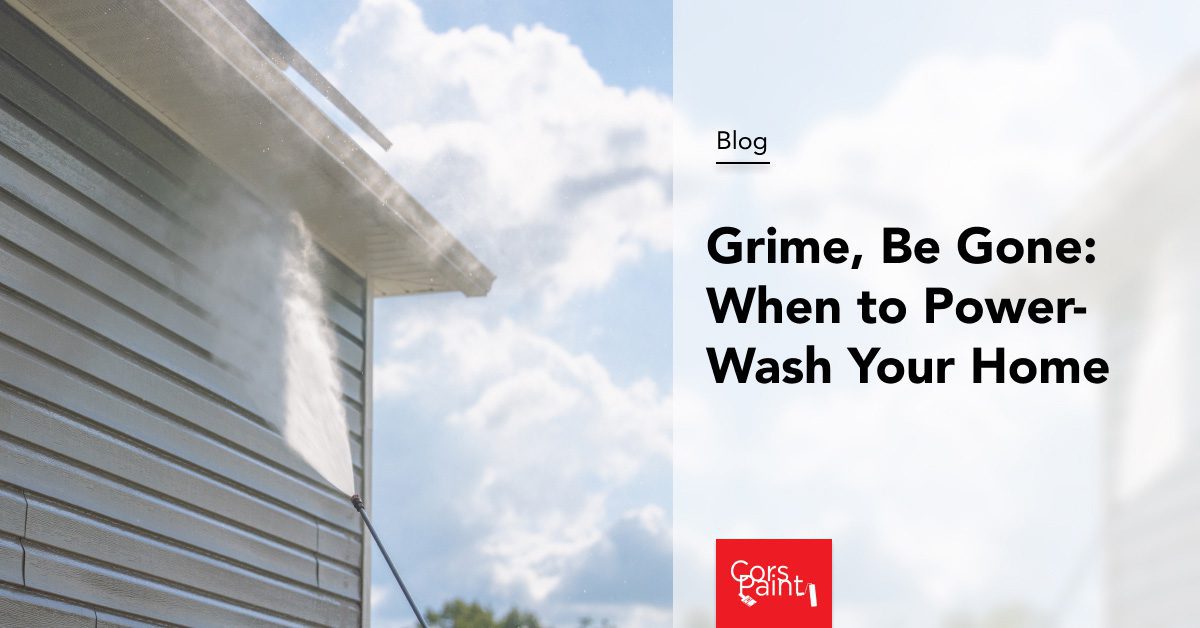
When a house starts to look dingy or rundown, your first impulse might be to think it needs a new coat of paint. And while that’s often the case, there’s another reason that house looks like it’s seen better days: It needs a good power-wash.
Power-washing your home exterior gets rid of the dirt and contaminants that naturally build up over time. Natural rain just won’t do it; you need consistent, applied pressure to get rid of the grime that builds up in the crooks and crannies.
Signs it’s Time for a Cleaning
In an ideal world, you’d be on a regular schedule for power-washing. But if it’s news to you that this is a regular part of home maintenance, you might not be motivated to get on it until the problem becomes visible. Some signs it’s well-past time to get washing are:
- Discoloration. If you start to notice discolored sections on your siding or roof, that’s a problem.
- Visible Grime. If your walls start looking like they have a five-o’clock shadow, it’s time to wash them.
- Full Gutters. If your gutters are overflowing, you likely need to get them cleaned out and wash the house while you’re at it.
- Stained Driveway. When you power-wash your house, you’ll likely want to hit your driveway, too. The driveway is often the canary in the coal mine of home power-washing; once your driveway is in need of a wash, your house probably is, too.
How Often Should You Power-Wash?
The answer really depends on your type of climate and environment. Homes in coastal areas should be washed the most frequently – roughly every 3 months – as the salty air is pretty detrimental to buildings’ exteriors.
On the other end of the spectrum, homes in dry, landlocked climates can get away with less frequent power-washes, usually once a year. They’re still vulnerable to dust and dirt, though.
Fortunately, most of our clients in central Florida are not in a coastal climate, but they are in a humid climate which also requires frequent power-washing. Homes in humid areas are particularly vulnerable to organic growth, like algae or mold. Schedule your power-wash every 6 months or so.
Staying Safe: For You, and Your Home
We highly recommend working with a professional team to power-wash your house. But in the event you do it yourself, there’s some important components to keep in mind:
- Set the right pressure for your material. Using too strong a pressure can damage your home, while using too light a pressure can make the wash ineffective. Different materials have different ideal pressures (metal siding has a higher ideal pressure than a wooden wall, for example), so make sure to find the ideal pressure before you start working.
- Look for cracks and damage before working. If there’s a crack in your wall, power-washing could seriously exacerbate it. Check for existing damage before you get to work.
- Never hit yourself or someone else with the water stream. You can get seriously injured with this level of pressure.
Don’t Risk a High-Powered Mishap – Trust CorsPaint
While you can technically get all the tools and power-wash your house yourself, this is one area where DIY has a greater-than-average risk level and initial investment. If you’re looking to cut costs, don’t do it here.
Our team at CorsPaint has tons of experience power-washing homes, both before an exterior paint job and on its own. Contact our team for stress-free power-washing that will leave your home looking sparkly new.
0 Comments