
Whether you’re moving into a new home or refreshing your current one, you’re just about guaranteed to run into some road bumps along the way.
Drywall damage is one of the most common issues that homeowners find. Maybe the previous residents hung a lot of photos. Maybe a wardrobe banged against a wall during the move. Or maybe, water damage has gotten into the home.
So how big of a deal is drywall damage, anyway? Is it the type of thing you can fix on a Sunday afternoon, or do you need to phone a pro? Read on to learn the steps for repairing drywall in your home and when the task may require a bit more expertise.
Steps for Fixing on Your Own
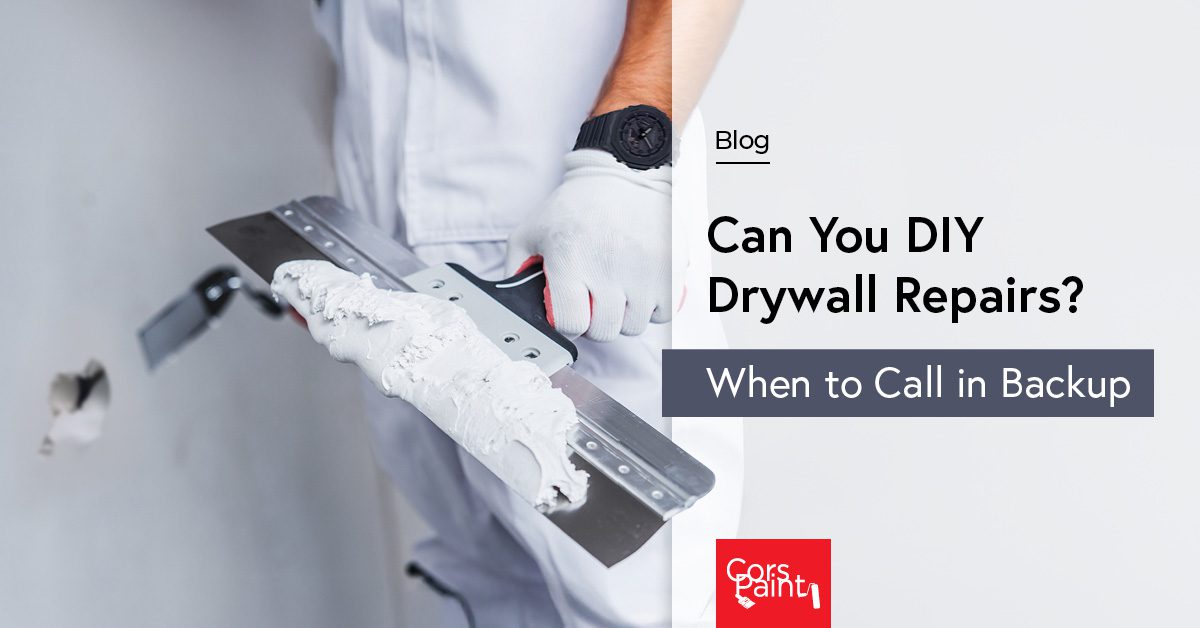
There’s good news: For most cases of drywall damage, the repairs are quick and pretty easy. Just follow these steps and no one will notice any unwanted texture.
- Clean the area. Make sure any dust and loose debris is gone.
- Apply a thin layer of spackle. Use a small amount and spread it as thinly and widely as possible. Less is more.
- Sand. Once the spackle dries, sand the area down until it’s smooth.
- Paint. Make sure to clean again and prime the area before you apply paint.
Then you’re done!
Small Repairs are Quick Fixes
Not all types of damage are created equal. Small imperfections are best-suited for DIY fixes.
Nail Holes
The vast majority of drywall damage you’ll run into comes from nail holes left from wall art or shelving. These blemishes are small and basically inevitable whenever you hang a photo in your home. Fortunately, they’re also easy to repair, which is great for tenants trying to get those security deposits back!
Hairline Cracks
Hairline cracks are a common form of drywall damage that usually come from changes in humidity and the normal shifting and settling that houses go through. They’re most common in new homes still settling into their foundation.
While you can generally repair hairline cracks the same way that you would for other small damages, consider using a flexible silicone caulk which will better accommodate the natural movements of the house.
And make sure to keep an eye on new cracks or ones that grow near corners. If you’re concerned the crack might be from something bigger, get it checked out.
Peeled Drywall
Command strips might seem better for wall health than nails, but they often peel paint and drywall up with them.
If your command strips take out a chunk of drywall, don’t panic. You can likely still sand down and caulk over the section of damage, though depending on the depth of the hole you may want to use a self-adhesive mesh patch.
Extensive Damage Requires Expertise
While minor damage is manageable to fix on your own, larger and more foundational damage might require expertise to repair.
Large Holes
Adding large holes to your walls is easier than one might think. Maybe kids’ roughhousing goes too far; perhaps the hammer misses the nail and goes right through the wall. Whatever their reason for coming to be, large holes require a bit more support to hold the spackle in place.
Experts will generally add backing strips for support and secure a new drywall strip to these, which can be pretty tricky to successfully do on your own.
Water Damage
If your damaged drywall feels soft, damp, or otherwise seems to be coming from a leak, you should definitely call in professionals. Not only will they strengthen your drywall and prevent further damage, they’ll also be better equipped to find the source of the drywall damage and help you figure out your next steps.
When it comes to water damage, fixing the rotten drywall by itself is just a bandaid solution. You need to find the source.
Don’t Get in Over Your Head
Knowing the basics of drywall repair is a good idea for tenants and homeowners alike. It can make you feel more empowered and save you time and money in the process.
But another part of being a knowledgeable homeowner is knowing when it’s time to ask for help. For repair projects that are too complicated, call up our team at CorsPaint. From the simplest spackling to water-logged walls, we can handle it.
0 Comments